
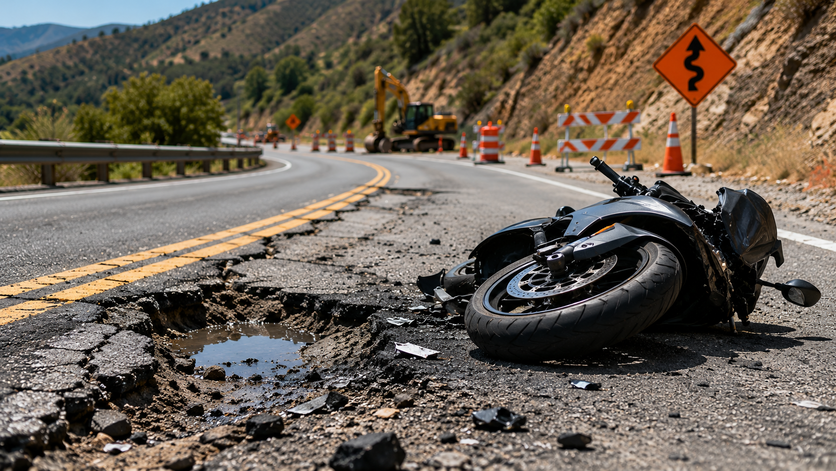
Roadway Hazards and Infrastructure Failures in Motorcycle Crashes
Motorcycle riders face unique dangers every time they travel on public roads. Unlike drivers inside passenger vehicles, riders have limited protection when unexpected hazards appear. Even a small roadway defect that might be a minor inconvenience for a car can become a life-changing event for someone on a motorcycle. At Burge & Burge, PC, we understand that many accidents occur because of unsafe road conditions rather than rider error.
When a crash occurs because of poor road maintenance, defective infrastructure, or dangerous construction zones, determining responsibility can become complicated. Working with a motorcycle accident attorney can help injured riders understand their legal options and pursue compensation when negligence contributed to the accident.
Below, we will explore the most common roadway hazards, how infrastructure failures contribute to collisions, who may be responsible, and what injured riders should know after an accident.
Why Road Conditions Matter More for Riders
Motorcycles interact with the road surface differently from larger vehicles. Because riders depend on only two wheels for stability, even minor defects can create significant safety concerns. Uneven pavement, loose debris, or damaged infrastructure can instantly affect balance and control.
A road that appears reasonably safe for cars may present serious risks for motorcycles. This is why roadway maintenance plays a major role in rider safety across cities, highways, and rural routes. Understanding these dangers can help riders stay alert and recognize potential threats before they become accidents.
Key Concerns
• Single defects can disrupt motorcycle stability
• Limited tire contact increases risk
• Unexpected obstacles reduce reaction time
• Poor surfaces affect braking performance
• Road conditions influence rider confidence
• Infrastructure quality directly impacts safety
Surface Defects That Frequently Lead to Collisions
Road surfaces naturally deteriorate over time, but delayed maintenance can create dangerous conditions. Cracks, potholes, and uneven pavement are among the most common hazards riders encounter.
When motorcycles hit damaged pavement, the impact can cause loss of steering control, tire damage, or sudden ejection from the bike. These incidents often occur without warning, leaving riders little time to react. Because motorcycles are more sensitive to road conditions than other vehicles, maintaining smooth and safe road surfaces remains essential.
Common Surface Hazards
• Potholes can destabilize motorcycles instantly
• Cracked pavement affects tire grip
• Uneven surfaces create steering challenges
• Road depressions increase accident risks
• Loose asphalt reduces traction
• Neglected maintenance contributes to crashes
Hidden Dangers Found in Construction Zones
Construction projects are necessary for improving roads, but poorly managed work zones can create hazards for riders. Temporary lane shifts, missing signs, loose gravel, and uneven pavement transitions can all increase accident risks.
Construction areas often change daily, making them unpredictable for riders who travel familiar routes. When warnings are missing or conditions are poorly maintained, serious collisions can occur. Agencies and contractors responsible for the project must take reasonable steps to keep motorists safe.
Many injured riders seek guidance from a motorcycle accident lawyer near Tuscaloosa after crashes involving unsafe construction zones and roadway modifications.
Construction-Related Risks
• Loose gravel affects motorcycle traction
• Temporary markings may cause confusion
• Poor signage increases collision risks
• Lane shifts require quick adjustments
• Uneven pavement transitions create instability
• Construction equipment can obstruct visibility
For additional information about liability involving road construction accidents, read our guide on Who Is Liable When a Motorcycle Accident Involves Road Construction in Alabama?
Drainage Problems and Water Accumulation Risks
Proper drainage systems help keep roads safe during and after rainfall. When drainage infrastructure fails, standing water can quickly develop and create dangerous riding conditions.
Motorcycles are especially vulnerable to water-covered roadways because reduced traction can significantly affect braking and maneuverability. Water can also conceal potholes and other roadway defects that are difficult to see until it is too late.
A trusted personal injury law firm often investigates whether inadequate drainage contributed to a crash when hazardous water accumulation is involved.
Water-Related Hazards
• Standing water reduces tire grip
• Poor drainage creates slippery conditions
• Hydroplaning risks increase significantly
• Flooded roadways limit visibility
• Water can conceal roadway defects
• Drainage maintenance improves safety
Missing or Damaged Traffic Control Devices
Traffic signs, lane markings, and signals help drivers and riders navigate safely. When these safety devices are missing, damaged, or poorly maintained, confusion and collisions can occur.
Motorcyclists depend on clear guidance, especially at intersections, construction areas, and high-speed roadways. Without proper traffic control, riders may face unexpected hazards or misunderstand roadway conditions.
Consistent maintenance of signs and signals plays an important role in preventing avoidable accidents.
Traffic Control Problems
• Faded markings reduce lane visibility
• Broken signals increase intersection risks
• Missing signs confuse motorists
• Poor guidance affects reaction times
• Visibility issues contribute to crashes
• Maintenance failures create hazards
Unsafe Road Design and Engineering Issues
Some accidents occur because of problems that existed long before the crash happened. Poor roadway design can create ongoing safety concerns for everyone who uses the road.
Sharp curves without adequate warnings, limited visibility, dangerous intersections, and improper banking can increase the likelihood of collisions. These problems may not be obvious until multiple accidents occur in the same location.
An experienced motorcycle accident injury lawyer often works with engineers and accident reconstruction experts to determine whether defective design contributed to a crash.
Engineering Concerns
• Sharp curves reduce reaction opportunities
• Blind spots increase danger
• Poor intersection design causes conflicts
• Inadequate warnings affect safety
• Engineering flaws create recurring risks
• Road design influences accident frequency
Debris and Objects Left on Roadways
Road debris is another common factor in motorcycle accidents. Objects that may seem minor to vehicle drivers can become major obstacles for riders.
A rider attempting to avoid debris may suddenly change direction and lose control. In other situations, direct contact with an object can cause immediate instability and a serious crash.
Proper roadway inspections and cleanup efforts help reduce these risks and create safer travel conditions.
Debris Hazards
• Road debris can cause sudden crashes
• Unexpected obstacles reduce control
• Loose materials increase skidding risks
• Visibility affects avoidance efforts
• Debris removal improves roadway safety
• Maintenance crews play a key role
Bridge Defects and Structural Concerns
Bridges require ongoing inspection and maintenance to remain safe. Expansion joints, damaged surfaces, and deteriorating structures can create hazards for motorcyclists.
Because bridges often experience heavier wear and environmental exposure, defects may develop more quickly than on standard roadways. These issues can affect handling, especially during poor weather conditions.
Regular inspections and timely repairs help reduce accident risks for riders.
Bridge Safety Concerns
• Bridge joints affect tire stability
• Surface deterioration increases risks
• Wet conditions worsen hazards
• Maintenance improves rider protection
• Inspections identify developing problems
• Infrastructure investment enhances safety
Poor Lighting Conditions and Visibility Problems
Visibility plays a critical role in motorcycle safety. Roads with inadequate lighting can make it difficult for riders to identify hazards in time to avoid them.
Streetlights, reflective markers, and proper roadway illumination help create safer travel environments. When lighting systems fail, riders may struggle to recognize roadway defects, debris, or changing road conditions.
Nighttime travel requires additional caution, particularly in poorly illuminated areas.
Visibility Challenges
• Dark roadways limit hazard detection
• Poor visibility affects reaction time
• Lighting supports safe navigation
• Reflective markers improve awareness
• Nighttime risks increase without illumination
• Maintenance enhances roadway safety
Determining Liability After an Infrastructure-Related Accident
Identifying responsibility after a roadway-related motorcycle accident often requires extensive investigation. Multiple parties may share responsibility depending on the circumstances.
Government agencies, contractors, maintenance companies, and other entities may be responsible when negligence contributes to unsafe conditions. Gathering evidence quickly is often essential because roadway conditions can change soon after an accident occurs.
A thorough investigation can help determine who may be legally accountable.
Evidence That May Support a Claim
• Photographs document hazardous conditions
• Witness statements support claims
• Maintenance records reveal negligence
• Expert analysis strengthens investigations
• Liability depends on specific facts
• Prompt action preserves evidence
Steps Riders Should Take Following a Crash
The actions taken immediately after an accident can significantly affect future legal claims. Protecting health and preserving evidence should remain the top priorities.
Even when injuries seem minor, obtaining medical attention is important. Some injuries may not become noticeable until hours or days after the collision. Documentation can also play a valuable role in any future claim.
Taking the right steps early can help protect both your recovery and your legal rights.
Important Actions After a Crash
• Seek medical attention immediately
• Document roadway conditions carefully
• Collect witness information
• Take photographs when possible
• Report the incident appropriately
• Consult legal professionals promptly
Ready to Protect Your Rights After a Motorcycle Accident?
Motorcycle accidents involving roadway hazards are often more complicated than standard traffic collisions. Dangerous road conditions, infrastructure failures, poor maintenance, and defective design can all contribute to serious injuries. Understanding how these factors affect rider safety is the first step toward protecting your rights and pursuing accountability.
At Burge & Burge, PC, we help injured riders evaluate the circumstances surrounding their accidents and determine whether negligence played a role. If you or a loved one has been affected by unsafe road conditions, contact us today to discuss your situation and learn about your legal options. The right guidance can make a meaningful difference during a challenging time.

