
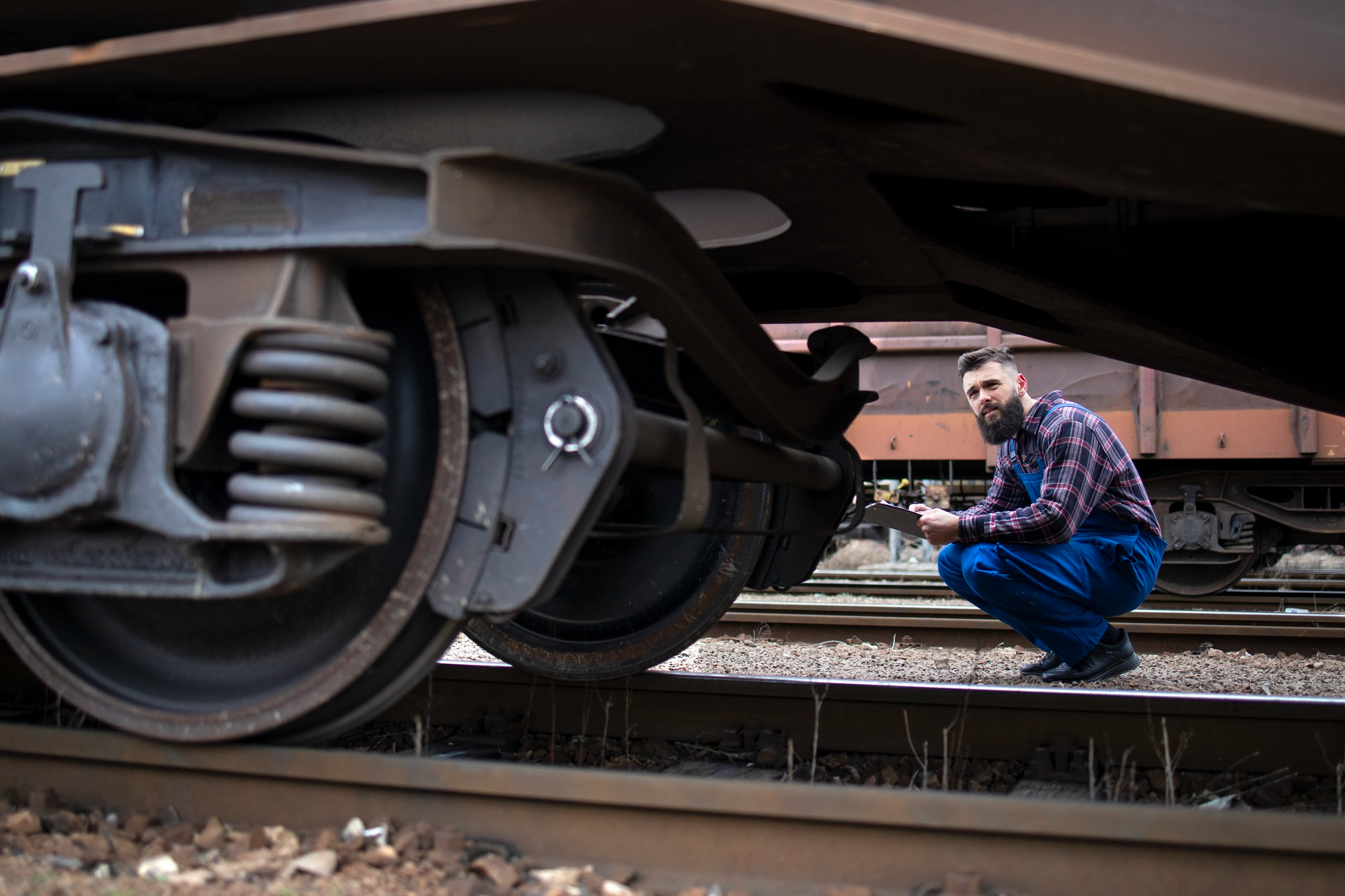
Rail Yard Worker Accident Claims
The rail yards of Alabama act as the industrial heart of the state, pulsing with the movement of heavy freight twenty-four hours a day. From the expansive operations at CSX’s Norris Yard in Irondale and the Boyles Yard in Birmingham to the busy port terminals in Mobile, rail yard workers keep the supply chain moving. This environment is loud, fast-paced, and unforgiving. For the men and women working on the ground switchmen, carmen, hostlers, and yardmasters the yard presents a unique set of hazards distinct from those faced by over-the-road crews.
You work in all weather conditions, often at night, surrounded by moving equipment that weighs thousands of tons. A single communication error, a patch of oil on the ballast, or a defect in a remote control locomotive unit can change your life in an instant.
The Distinct Legal Framework for Railroad Injuries
When a factory worker or office employee in Birmingham or Montgomery gets hurt on the job, they typically file for state workers’ compensation. Railroad workers fall under a completely different system. If you work for a common carrier by railroad, you are excluded from Alabama workers’ compensation laws. Instead, your rights are protected by a federal statute known as the Federal Employers’ Liability Act, or FELA.
Congress passed FELA in 1908 specifically to protect railroad workers, acknowledging the inherent dangers of the industry. It is important to recognize how this differs from state-level insurance systems:
- Fault-Based System: Unlike the no-fault nature of workers’ comp, FELA requires you to prove that the railroad was negligent. You must show that the carrier failed to provide a reasonably safe place to work.
- Lower Burden of Proof: While you must prove fault, the bar is lower than in a standard personal injury lawsuit. You only need to demonstrate that the railroad’s negligence played a part, no matter how small, in causing your injury.
- Comprehensive Damages: Workers’ compensation usually caps benefits and ignores non-economic damages. FELA allows you to sue for full lost wages, future earning capacity, and pain and suffering.
Common Rail Yard Hazards in Alabama
Yards are often more dangerous than the main line due to the congestion of equipment and the nature of the work. Crews are constantly coupling and uncoupling cars, throwing switches, and climbing on and off equipment. The following hazards frequently lead to serious injuries in Alabama rail facilities:
- Uneven Ballast and Walking Surfaces: Walking on large, loose, or oil-soaked ballast places immense strain on ankles and knees. Debris, discarded spikes, or overgrown vegetation can cause trip-and-fall accidents.
- Close Clearance Points: Yards are tightly packed. Workers riding the side of a car face the risk of being rolled between equipment or striking fixed structures if clearance points are not properly marked or observed.
- Moving Equipment: The risk of being struck by a locomotive or car is constant. This is exacerbated in yards where cars are “kicked” or roll freely during switching operations.
- Defective Handbrakes and Switches: Manually throwing a stiff or defective switch can cause severe back and shoulder injuries. Similarly, trying to set a handbrake that is rusted or jammed is a common source of debilitating orthopedic trauma.
- Slack Action: Sudden stops or starts during switching moves can throw workers inside a caboose or on a platform, leading to whiplash or spinal injuries.
Remote Control Locomotive (RCL) Accidents
The widespread adoption of Remote Control Locomotives (RCL) has introduced new risks to the rail yard environment. Major carriers often utilize RCL technology in yards like those in Decatur or Tuscaloosa to cut costs, often placing operators on the ground rather than in the cab.
This shift has led to specific safety concerns:
- Lack of Situational Awareness: An operator on the ground may not have the same vantage point as an engineer in the cab, creating blind spots where accidents can occur.
- Task Overload: RCL operators are often required to perform switching duties, protect the point, and operate the locomotive simultaneously, leading to distraction and errors.
- Equipment Malfunction: Connection failures between the Operator Control Unit (OCU) and the locomotive can result in delayed braking or unintended movement.
- Training Deficiencies: Accidents frequently occur when operators are not adequately trained on the specific characteristics of the yard or the limitations of the remote technology.
The “Safe Place to Work” Doctrine
Under FELA, railroads like CSX, Norfolk Southern, and others operating in Alabama have a non-delegable duty to provide a reasonably safe work environment. This duty is continuous and cannot be transferred to a third party. For yard workers, this obligation includes:
- Proper Staffing: Ensuring there are enough crew members to perform tasks safely without rushing or taking shortcuts.
- Tool Maintenance: Providing tools and equipment that are in safe working order, from lantern batteries to hydraulic switches.
- Safety Rule Enforcement: Strictly enforcing rules regarding “blue signal” protection to ensure workers are not moving under or between rolling equipment that could move.
- Training and Supervision: guaranteeing that all employees, especially those new to the yard, receive proper instruction on safety protocols and yard geography.
If the railroad fails in any of these duties and you are injured as a result, the railroad may be held liable for your damages.
Injuries Caused by Defective Safety Appliances
In some cases, you do not need to prove negligence in the traditional sense. Two federal statutes, the Safety Appliance Act (SAA) and the Locomotive Inspection Act (LIA), impose absolute duties on railroads. If a specific piece of safety equipment fails to perform as intended, the railroad is strictly liable for any resulting injuries.
Key safety appliances relevant to yard work include:
- Couplers: Couplers must couple automatically on impact and uncouple without the necessity of a worker going between the cars. If a coupler fails to make up, or if the pin lifter does not work, and you hurt your back trying to adjust it, the railroad is likely liable.
- Grab Irons and Ladders: Secure handholds are vital for workers climbing on and off cars. A loose, bent, or missing grab iron is a violation of federal law.
- Sill Steps: Bent or slick sill steps are a frequent cause of slips during mounting and dismounting.
- Handbrakes: Handbrakes must function efficiently. If a brake spins freely, fails to hold, or is exceptionally difficult to turn, it constitutes a defect.
When a violation of the SAA or LIA contributes to an injury, the railroad cannot argue that you were partially at fault.
Occupational Illness and Toxic Exposure in Yards
Accidents in rail yards are not always traumatic events like collisions or falls. Many yard workers suffer from occupational illnesses due to long-term exposure to hazardous substances found in the yard environment.
- Diesel Exhaust: Idling locomotives in the yard produce concentrated diesel fumes. Long-term inhalation is linked to lung cancer, COPD, and other respiratory diseases.
- Silica Dust: Dumping ballast used to maintain track stability releases silica dust. Maintenance of way and yard workers breathing this dust are at risk for silicosis and lung cancer.
- Creosote and Solvents: Frequent contact with creosote-soaked ties or industrial solvents used for degreasing can lead to serious skin conditions and chemical burns.
- Repetitive Stress: The cumulative trauma of throwing switches, walking on uneven ballast, and climbing ladders day after day can destroy joints and intervertebral discs. These cumulative trauma disorders are compensable under FELA.
Roles and Responsibilities Covered
Our firm assists various classifications of yard workers. The specific duties of your craft often determine the types of hazards you encounter.
- Switchmen and Conductors: Primary duties involve assembling and disassembling trains. Risks include coupling accidents, slips on ballast, and being struck by moving equipment.
- Carmen: Responsible for inspecting and repairing rail cars. Risks include being crushed between cars, “blue flag” violations where protection is removed prematurely, and injuries from heavy tools.
- Hostlers: Workers who move locomotives within the yard area. They face risks from mounting and dismounting moving equipment and collisions within the mechanical service areas.
- Yardmasters: While often in a tower, yardmasters can be injured if they are required to go on the ground or if the tower environment itself is unsafe (e.g., stairs, electrical hazards).
Recoverable Damages for Alabama Rail Workers
Because FELA is designed to make the injured worker whole, the range of recoverable damages is broader than what state systems offer. If you are injured in an Alabama rail yard, you may be entitled to compensation for:
- Past and Future Lost Wages: This includes not just your base pay, but lost overtime, arbitraries, and tier 1 and tier 2 Railroad Retirement credits.
- Loss of Earning Capacity: If your injuries prevent you from returning to your specific craft or the railroad industry entirely, you can recover the difference in what you would have earned versus what you can earn now.
- Medical Expenses: Full coverage for surgeries, hospitalization, physical therapy, medication, and any future medical care related to the injury.
- Pain and Suffering: Compensation for the physical pain and the mental anguish caused by the injury.
- Loss of Enjoyment of Life: Damages awarded if your injury prevents you from engaging in hobbies, sports, or family activities you enjoyed before the accident.
Steps to Take Immediately After a Yard Accident
The minutes and hours following an injury in the yard are vital for protecting your health and your future legal claim. Railroad claims departments act quickly to mitigate their liability. You must take steps to preserve the truth of what happened.
- Report the Injury: Notify your supervisor immediately. Do not let anyone talk you out of filing a report.
- Seek Medical Attention: See a doctor of your choice. While the railroad may suggest a specific medical provider, you have the right to choose your own physician who will prioritize your health over the company’s interests.
- Document the Scene: If you can, take photos of the area. Photograph the defective switch, the oil on the walkway, the broken grab iron, or the lack of lighting.
- Identify Witnesses: Get the names and contact information of co-workers who saw the accident or can testify to the unsafe condition.
- Complete the Personal Injury Report Carefully: When filling out the accident report, be specific. Clearly state what the railroad did wrong or what equipment was defective. Avoid vague language.
- Decline Recorded Statements: A claims agent may ask for a recorded statement. You are not legally obligated to give one. Politely decline until you have spoken with a lawyer.
Protecting Your Livelihood
A severe injury in the yard can threaten your ability to provide for your family. The railroad has vast resources, but FELA provides a powerful tool to level the playing field. Whether your injury occurred at a major hub like Birmingham or a smaller switching operation, federal law grants you the right to seek full compensation. If you or a loved one has been injured while working in an Alabama rail yard, do not face the claims process alone. We are ready to help you understand your rights and options. Contact Burge & Burge, PC today at 205-947-2962 for a consultation.