
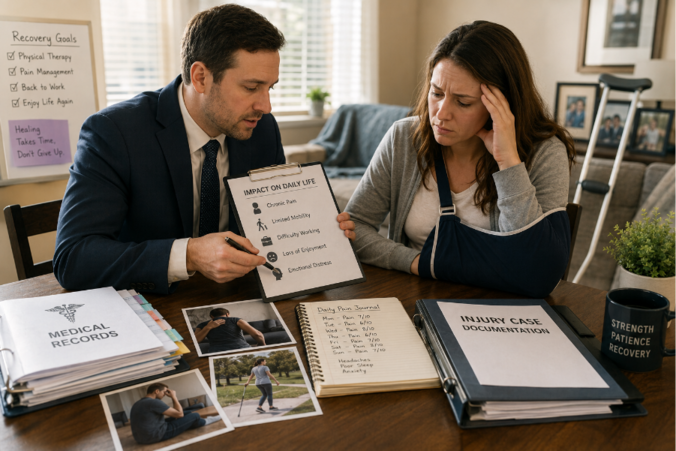
Proving Pain, Suffering, and Quality-of-Life Loss in Injury Cases
When dealing with Injury Cases, proving physical injuries is usually the easier part. The harder part is showing how deeply the injury has affected daily life, emotional well-being, and long-term comfort. A Personal Injury law firm plays a crucial role in helping injured individuals translate these personal struggles into clear, structured legal evidence that supports a fair claim.
Firms like Burge & Burge, PC often emphasize that pain and suffering are just as important as medical bills or physical treatment. These damages reflect the real human impact of an accident, including emotional distress, reduced independence, and lifestyle changes that may last for months or even years.
Understanding how to prove these losses is essential because insurance companies do not automatically accept them without strong supporting evidence. Below, we will break down how pain, suffering, and quality-of-life loss are proven in injury claims and why each type of evidence matters.
Understanding Pain And Emotional Harm
Pain and emotional suffering are often invisible, but they can have the most lasting impact after an injury. Unlike broken bones or visible wounds, emotional harm affects mental stability, relationships, confidence, and overall happiness. These effects can continue long after physical healing begins.
Emotional suffering can also appear gradually, making it harder to recognize or document early. Many people underestimate how deeply an accident can affect mental health. Anxiety, fear, and frustration are common reactions that can become long-term challenges. Proper documentation helps connect these emotional changes directly to the incident.
- Emotional distress can continue long after physical recovery
- Anxiety and fear may develop after traumatic events
- Chronic pain often affects mental well-being over time
- Sleep disruption increases emotional instability
- Mood changes can impact relationships and work life
Medical And Psychological Documentation
Medical evidence is one of the strongest foundations in Injury Cases, but psychological evaluations are equally important when proving suffering. Together, they provide a complete picture of both physical and emotional harm.
Doctors can explain the physical injuries, while mental health professionals evaluate emotional and psychological effects. This combination helps show how deeply the injury has affected overall well-being. Without these records, it becomes difficult to prove long-term suffering in a structured legal way.
- Medical reports confirm injury severity and treatment needs
- Therapy records show emotional recovery progress
- Psychological evaluations document trauma and distress
- Prescription history supports ongoing treatment claims
- Specialist opinions strengthen long-term impact evidence
Daily Life Disruption And Functional Loss
One of the clearest ways to show quality-of-life loss is by documenting how daily life has changed after the injury. This includes physical limitations, reduced independence, and difficulty completing routine tasks.
Even simple activities like walking, cooking, or driving may become difficult. These changes demonstrate how injuy affects independence and normal living. Functional loss is often a major factor in determining compensation because it reflects real-life limitations.
- Reduced mobility limits independence and routine activity
- Household tasks become difficult or impossible
- Social participation decreases significantly
- Work performance and attendance are affected
- Long-term limitations impact lifestyle choices
Workplace Impact And Financial Strain
Injury Cases often affect a person’s ability to work, which directly impacts financial stability and career growth. These limitations may be temporary or permanent depending on injury severity.
A workplace injury attorney often helps gather employment records, wage statements, and job performance documentation to show how the injury has affected professional life. This type of evidence is critical in proving both financial and emotional stress caused by the accident.
- Missed workdays show direct income disruption
- Reduced productivity affects career progression
- Job role changes indicate physical limitations
- Employer records support claim accuracy
- Long-term restrictions impact future earning ability
Personal Journals And Real Life Tracking
Personal documentation is one of the most powerful tools for proving suffering. Journals, notes, and daily logs provide a real-time record of how the injury affects everyday life.
These records show pain levels, emotional changes, and physical limitations over time. They also help connect medical evidence with real-life experiences. Insurance companies often take this type of documentation seriously when evaluating claims.
- Daily journals track pain and emotional changes
- Sleep patterns reflect ongoing discomfort
- Activity logs show physical limitations clearly
- Mood tracking demonstrates emotional impact
- Personal notes support consistency in claims
Legal Strategy And Evidence Organization
Even strong evidence can lose impact if it is not properly organized. Legal professionals help structure documentation so that it clearly shows the connection between the injury and its long-term effects.
A Personal Injury Attorneys in Birmingham team often organizes medical reports, personal journals, and expert evaluations into a clear timeline. This structured presentation makes it easier for insurers and courts to understand the full impact of the injury.
- Chronological records improve case clarity
- Structured files strengthen legal arguments
- Organized evidence reduces claim disputes
- Expert summaries highlight key damages
- Proper documentation improves negotiation outcomes
External Resource For Claim Evaluation
Understanding how compensation is calculated can help injury victims prepare stronger claims. Insurance companies use multiple factors to evaluate both financial and non-financial damages, including pain and suffering.
Learn how insurance companies calculate injury claim value
This resource explains how insurers assess injury severity and emotional impact. It also shows how documentation influences settlement outcomes. Understanding this process helps victims build stronger cases. It provides insight into how non-economic damages are valued.
Long-Term Emotional And Physical Consequences
Some injuries do not fully heal and continue to affect individuals for years. These long-term consequences are important in proving quality-of-life loss in Injury Cases.
Chronic pain, emotional distress, and physical limitations can require ongoing treatment and lifestyle adjustments. These effects show that the injury has a lasting impact beyond initial recovery.
- Chronic pain affects daily comfort and mobility
- Emotional distress may continue long-term
- Ongoing therapy may be required
- Permanent limitations impact lifestyle choices
- Long-term care needs increase recovery burden
Why Strong Evidence Matters In Injury Cases
Strong evidence is the backbone of proving pain and suffering. Without it, emotional and lifestyle impacts can be difficult to validate. Evidence helps convert personal experience into legally recognized damages.
Consistency across medical, personal, and legal records increases credibility. Decision-makers rely heavily on documented proof when evaluating claims. This is why thorough documentation is essential from the beginning.
- Evidence validates emotional and physical suffering
- Consistent records improve claim credibility
- Documentation reduces insurance disputes
- Strong proof improves settlement outcomes
- Organized evidence strengthens negotiation power
Building A Strong Claim For Real Life Impact
Proving pain, suffering, and quality-of-life loss in injury cases requires detailed evidence that reflects both physical and emotional changes. It is not enough to show medical bills alone; the real impact of the injury must be clearly documented and presented.
A trusted legal team like Burge & Burge, PC helps ensure that every aspect of suffering is properly evaluated and included in your claim. Their experience in handling injury cases helps injured individuals present a complete and compelling case for fair compensation. If you are unsure how to begin documenting your experience, Contact us now to get clear guidance on your next steps.
If you are struggling with how to document your suffering or understand your legal options, getting early guidance can make a meaningful difference in your outcome.

