
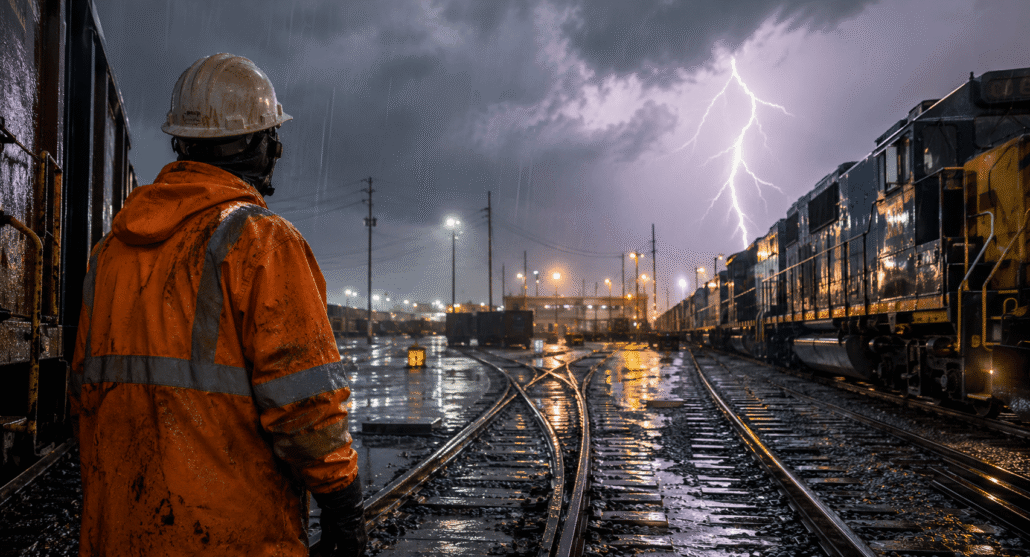
How Do Weather Conditions Affect FELA Claims in Alabama?
The physical demands of operating and maintaining the sprawling freight networks across Alabama are immense even under ideal conditions. For railroaders working the CSX lines through Birmingham or the busy switching operations at Army Yard, the environment is inherently unforgiving. When unpredictable and severe weather systems roll across the Southeast, those baseline hazards multiply exponentially.
From the oppressive, stagnant humidity of a Jefferson County summer to sudden Gulf Coast thunderstorms washing over the Port of Mobile, Alabama, environmental factors fundamentally change the safety landscape of a rail yard. When an injury occurs during these adverse conditions, a common misconception is that the weather itself is entirely to blame, absolving the carrier of responsibility.
How Do Weather Conditions Affect FELA Claims in Alabama?
Weather conditions profoundly affect FELA claims in Alabama by establishing whether a railroad carrier failed to provide a safe work environment during adverse elements. When carriers force crews to work through extreme heat, torrential rain, or severe storms without proper safety protocols, they can be held liable for resulting injuries under federal law.
The core of any FELA claim is negligence. Unlike state workers’ compensation systems, FELA requires an injured worker to demonstrate that the railroad was at least partially at fault for the incident. Weather conditions introduce a specific type of foreseeable risk.
Railroad companies have access to advanced meteorological tracking, continuous dispatch communication, and comprehensive safety manuals. When a carrier recognizes an incoming severe weather threat but fails to alter operations, provide appropriate safety equipment, or issue necessary warnings, that failure constitutes negligence.
In Alabama, changing weather patterns frequently turn routine tasks into life-threatening situations. The carrier’s responsibility is to adapt to these changes. Consider the following ways a carrier might be negligent regarding weather:
- Failing to halt coupling or switching operations during active lightning storms or blinding downpours.
- Declining to issue specialized high-traction footwear or anti-slip materials for workers climbing wet locomotives.
- Ignoring reports of washed-out ballast or compromised track integrity following a period of heavy flooding.
- Refusing to clear vegetation that obscures sightlines, which becomes particularly dangerous during morning fog in low-lying areas.
When a railroad prioritizes maintaining a strict freight schedule over the immediate safety of its crew during a severe weather event, it breaches its duty of care. If that breach plays any role, no matter how small, in causing an injury, the railroad is liable.
Are Railroads Liable for Acts of God Under FELA?
Railroads are not automatically liable for unforeseeable weather events, but they are liable under FELA if their negligence compounded the danger. If a carrier ignores severe weather warnings, fails to issue appropriate safety gear, or mandates operations during dangerous conditions, they bear responsibility for the foreseeable injuries that result.
Railroad defense attorneys frequently attempt to use the “Act of God” defense, a common law doctrine for unforeseeable natural events to shield carriers from liability. They argue that a sudden microburst, a flash flood, or a rapid drop in visibility was entirely an act of nature, placing the event outside the company’s control. However, this defense often falls apart under close legal scrutiny in FELA cases, as courts focus on foreseeability.
The law recognizes that while a railroad cannot control the weather, it absolutely controls how it exposes its workforce to that weather. The question in a FELA case is rarely about the weather event itself; it is about the carrier’s preparation and response.
A carrier’s negligence in the face of an “Act of God” often involves:
- Failing to properly inspect and maintain drainage systems around yards, leading to predictable flooding that causes slip hazards.
- Dispatching a train into a known, severe storm cell despite National Weather Service warnings.
- Neglecting to adequately secure loose equipment or materials in a yard prior to forecasted high winds.
- Ordering a crew to tie down a train in an area known to be highly susceptible to sudden washouts without providing a safe evacuation method.
The legal standard under FELA is whether the railroad failed to take reasonable precautions against foreseeable risks. In modern railroading, severe weather is almost always foreseeable.
What Are the Most Common Weather-Related Railroad Injuries in Alabama?
The most common weather-related railroad injuries in Alabama include severe heatstroke during summer months, slip and fall injuries on slick railcars during heavy downpours, and crush injuries resulting from poor visibility in fog or storms. These conditions frequently lead to broken bones, traumatic brain injuries, and severe musculoskeletal damage.
The physical environment of a rail yard or a mainline track is largely composed of steel, heavy ballast rock, and creosote-treated wood. When weather interacts with these materials, the results are hazardous.
Rain and moisture are persistent threats. A light drizzle is often enough to coat steel grab irons, sill steps, and ladders with a slick sheen. When a conductor or brakeman must mount or dismount moving equipment, a slip can easily result in an amputation or a fatal crush injury. Heavy rains also compromise the stability of the large ballast rocks bordering the track. Walking on wet, shifting ballast while inspecting a train or performing a blue flag operation regularly leads to severe knee, ankle, and lower back injuries.
Poor visibility presents another significant danger. Dense morning fog along the rivers near Decatur or heavy storm systems moving through the Birmingham classification yards severely limit an engineer’s ability to see track conditions or a conductor’s hand signals.
Common injuries resulting from these conditions include:
- Spinal disc herniations and ligament tears from losing footing on wet or icy ballast.
- Traumatic brain injuries from falling from slick locomotive ladders or tank cars.
- Crush injuries occur when visibility is compromised during switching operations.
- Cumulative trauma disorders exacerbated by working in physically taxing environmental extremes.
How Does Alabama’s Extreme Heat Impact Railroad Worker Safety?
Alabama’s extreme heat impacts railroad worker safety by causing rapid physical exhaustion, dehydration, and heat illness. Working in high-temperature environments like rail yards without adequate hydration breaks or cooling stations severely impairs cognitive function and physical reaction times, significantly increasing the likelihood of catastrophic accidents and long-term health complications.
During the height of an Alabama summer, the temperature on a rail bed often exceeds the ambient air temperature by 10-20 degrees Fahrenheit. The steel rails, the heavy rock ballast, and the massive diesel engines absorb and radiate heat relentlessly.
When railroads require extended shifts or mandatory overtime during these periods, the physical toll accumulates rapidly. Fatigue compounds, and a worker’s ability to recognize developing hazards deteriorates. A railroader suffering from early-stage heat exhaustion may fail to hear an approaching car in a noisy yard or misjudge the timing of a coupling operation.
Liability in heat-related FELA claims often centers on the carrier’s policies and actions. A railroad may be negligent if it:
- Fails to provide adequate supplies of cool, potable water and ice to crews operating far from terminal facilities.
- Refuses to modify work-rest cycles during periods of extreme heat advisories.
- Disciplines or threatens workers who stop operations to seek shade or recover from heat-related symptoms.
- Assigns highly physically demanding tasks, such as replacing heavy knuckles or carrying equipment, to visibly exhausted workers.
What Evidence Proves Weather-Related Negligence in a FELA Claim?
Proving weather-related negligence in a FELA claim requires demonstrating that the railroad knew or should have known about the dangerous conditions. Critical evidence includes meteorological reports, internal dispatcher logs, safety protocol manuals, crew call records, and witness testimony confirming the carrier failed to mitigate the specific environmental hazards.
Because FELA requires a showing of fault, an injured railroader cannot simply state that it was raining when they fell. They must prove that the carrier’s action or inaction contributed to the fall. This requires a thorough and prompt investigation before evidence disappears or memories fade.
Railroads investigate accidents immediately to protect their own interests, often sending claims adjusters and supervisors to the scene within hours. Securing independent evidence is vital to counter the carrier’s narrative that the accident was simply an unavoidable weather event or the worker’s own fault.
Essential documentation in these claims typically includes:
- Meteorological Data: Certified historical weather data proving the severity of the conditions at the exact time and location of the injury.
- Dispatch and Communications Transcripts: Audio recordings or transcripts showing what warnings were communicated to the crew and what orders were given despite the weather.
- Hours of Service Logs: Electronic crew management data showing if the worker was suffering from overtime fatigue, which significantly reduces the ability to safely navigate weather hazards.
- Site Photographs: Immediate documentation of the specific hazard, such as washed-out ballast, standing water, or lack of proper lighting during a storm.
- Maintenance Records: Documentation showing whether the railroad ignored prior complaints about poor drainage or slick equipment in the specific area where the injury occurred.
How Local Alabama Geography Shapes Railroad Weather Hazards
Alabama has one of the most active freight rail networks in the southeastern United States. The specific environmental hazards a railroader faces depend heavily on where in the state they are operating.
For workers stationed in the southern region near Mobile County, the proximity to the Gulf of Mexico introduces distinct dangers. Operations near the Port of Mobile, Alabama, frequently contend with sudden, intense squalls, localized flooding, and the high-wind conditions associated with tropical depressions. The high saline content in the coastal air also contributes to the rapid degradation and rusting of safety equipment, ladders, and walkways, making them particularly treacherous when wet.
In the central industrial corridors, including the CSX Boyles Yard on the north side of Birmingham and the Norfolk Southern Birmingham Terminal, the environment is highly structured but intensely congested. Heavy summer thunderstorms combined with the region’s hilly topography can lead to rapid water accumulation in low-lying track areas. Additionally, the sheer volume of mandatory overtime and continuous switching operations in these hubs means workers are frequently navigating these wet, slick conditions while already physically depleted.
In the northern part of the state, along the freight runs from Birmingham to Huntsville, temperature extremes play a larger role. These long stretches of mainline track are susceptible to “sun kinks” thermal misalignments of the steel rails caused by intense summer heat, which can lead to sudden and violent derailments. During the winter, these same elevated corridors are prone to freezing rain and ice accumulation, turning routine inspections into highly dangerous balancing acts.
When pursuing a FELA claim, understanding the local venue is as important as understanding the law. Claims must be filed exclusively in federal court. For example, workers in the northern and central parts of the state may file in the U.S. District Court for the Northern District of Alabama in Birmingham, while those in the south may use the U.S. District Court for the Southern District of Alabama in Mobile. Identifying the venue that best serves the strategic needs of the case requires experienced legal guidance.
How Long Do I Have to File a Weather-Related FELA Claim in Alabama?
The statute of limitations for filing any FELA claim, including those involving weather-related injuries, is three years from the date the injury occurred. Missing this strict federal deadline permanently bars you from recovering compensation for your medical expenses, lost wages, and pain and suffering.
Time is not on the side of the injured worker. While three years may seem like a generous window, the process of investigating a weather-related accident, securing transient evidence like dispatcher audio, and building a compelling case of carrier negligence takes significant time.
Furthermore, some weather-related injuries are not immediately apparent. A slip on wet ballast might cause a minor ache that develops into a severe spinal issue months later. FELA accommodates these situations through the discovery rule, meaning the three-year clock may begin on the date you knew or reasonably should have known that your condition was caused by railroad work. However, relying on the discovery rule without prompt legal counsel is risky. The safest approach is to consult an attorney immediately after any on-the-job injury.
Why FELA Applies Instead of State Workers’ Compensation
If you are injured while working for a railroad in Alabama, the state’s workers’ compensation system does not apply to you. Congress specifically excluded railroad workers from state systems to address the extraordinary dangers of interstate railroad employment.
Filing for Alabama workers’ compensation instead of pursuing a FELA claim is a costly mistake. State workers’ compensation operates on a fixed benefit schedule that severely limits recovery. Under FELA, however, an injured railroader who can prove the carrier’s negligence can recover full, uncapped economic and non-economic damages.
Recoverable damages under FELA include:
- All past and future medical expenses, including surgeries and rehabilitation.
- Lost wages, including overtime pay and shift differentials.
- Diminished earning capacity if the injury prevents a return to railroad work.
- Pain and suffering, accounting for the long-term physical and emotional toll.
This difference in compensation frameworks is profound. A career-ending injury sustained during a severe weather event at a Birmingham yard will yield vastly different financial realities under FELA compared to state law.
Contact Burge & Burge, PC for a FELA Consultation
When a weather-related injury threatens your health, your career, and your family’s financial security, you need legal representation that understands the specific complexities of the railroad industry. The railroad’s claims department will begin building a defense immediately; you deserve an advocate who will move just as decisively to protect your rights.
At Burge & Burge, PC, we represent Alabama railroad workers in FELA claims throughout the state, from the yards in Birmingham and the freight lines through Huntsville to the port facilities in Mobile. We handle every aspect of the case, from issuing preservation letters to secure weather and dispatch data to negotiating with the carrier, allowing you to focus entirely on your physical recovery. Contact us today for a free, confidential consultation.

