
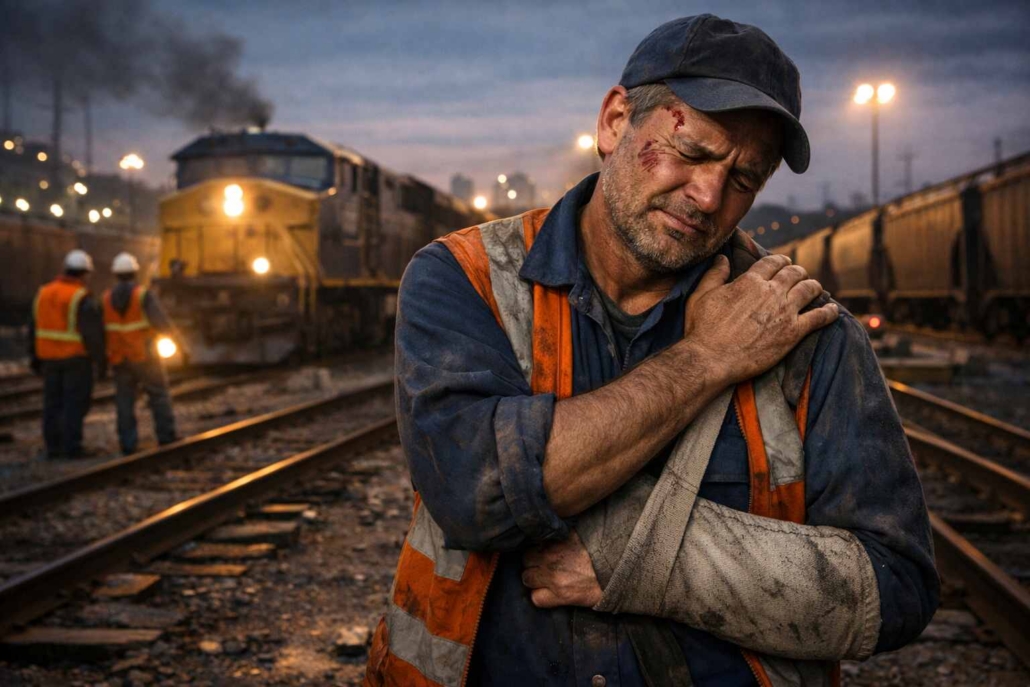
Can Railroad Workers File FELA Claims for Injuries During Mandatory Overtime in Alabama?
The call to report for a mandatory overtime shift can come at any hour. For Alabama railroaders working the sprawling network of CSX lines through Birmingham, the Norfolk Southern corridors into Decatur, or the busy switching operations at Norris Yard, that call is a routine part of the job. When a worker is already physically taxed from a full shift and an injury occurs during those additional hours, a question arises that deserves a direct, accurate answer: does federal law protect you, and can you pursue the full compensation you need to recover?
The short answer is yes. The Federal Employers Liability Act, known as FELA, does not limit your rights based on the type of shift you were working when the injury happened. What matters is whether the railroad’s negligence contributed to your injury. But the full picture is more nuanced, and understanding how overtime fatigue, federal Hours of Service regulations, and Alabama-specific court procedures interact with your FELA claim can mean the difference between a fully compensated recovery and a seriously undervalued one.
Can a Railroad Worker File a FELA Claim for an Injury That Occurred During Mandatory Overtime?
Yes. Alabama railroad workers can file a FELA claim for injuries sustained during mandatory overtime shifts. FELA does not distinguish between regular and overtime hours. If any degree of railroad negligence contributed to the injury, the worker has the right to pursue full compensation for medical expenses, lost wages, and pain and suffering.
FELA, codified at 45 U.S.C. § 51 et seq., is a federal statute that governs all on-the-job injuries sustained by railroad workers in interstate commerce. Unlike Alabama’s workers’ compensation system, which provides limited, fixed benefits regardless of fault, FELA requires a worker to show that the railroad was at least partially negligent. The trade-off is significant: a successful FELA claim allows recovery of full economic and non-economic damages with no statutory caps.
The source of the overtime assignment does not change your rights under the statute. Whether you were called in for emergency coverage after a crew member fell ill, compelled to stay late at a Birmingham classification yard, or required to operate additional hours on a run between Mobile and Tuscaloosa, the railroad owes you the same duty of care during every minute of your shift. If that duty was breached and you were hurt, a FELA claim is your legal path to compensation.
What makes overtime injury claims particularly powerful is that the railroad’s own scheduling decisions can serve as evidence of negligence. When a carrier repeatedly assigns workers to double shifts or knowingly understaffs a crew, those choices create foreseeable risks. The railroad cannot compel a worker into a dangerous situation and then later claim the resulting injury was unforeseeable.
Key points to understand about FELA overtime claims:
- FELA applies to all hours worked, including overtime, emergency callbacks, and extended shifts required by the carrier.
- The railroad is liable if its negligence played any role in the accident, no matter how small. This is a far lower bar than the pure contributory negligence standard applied in some Alabama civil claims.
- Alabama state workers’ compensation laws do not apply to railroad workers covered by FELA. Attempting to file a workers’ comp claim instead of a FELA claim is a costly mistake that severely limits your recovery.
- The statute of limitations for a FELA claim is three years from the date of the injury. Missing that deadline permanently bars recovery.
How Does Mandatory Overtime Increase the Risk of Railroad Injuries in Alabama?
Mandatory overtime increases injury risk by compounding physical fatigue, reducing reaction time, and impairing a worker’s ability to recognize developing hazards. When a railroad requires extended shifts without adequate rest, it creates foreseeable conditions for accidents involving heavy equipment, moving cars, and switching operations that demand constant alertness.
Railroad work is physically demanding under ideal conditions. Operating a locomotive on a freight run from Birmingham to Huntsville requires sustained concentration over many hours. Working in a classification yard near the Norfolk Southern Birmingham Terminal involves constant exposure to moving cars, coupling operations, and unpredictable equipment behavior. When a worker has already completed a standard shift and is compelled to continue without meaningful rest, the cognitive and physical toll accumulates in ways that create serious safety hazards.
Federal research on fatigue in transportation industries consistently shows that extended hours impair alertness at rates comparable to alcohol impairment. Railroad carriers operating in Alabama are subject to the Hours of Service Act, which places limits on how long train crews can work before mandatory off-duty periods. When a carrier systematically pressures workers to exceed these limits, or when dispatchers call back workers before their mandatory rest periods have concluded, the company has created a foreseeable risk of serious injury.
In our experience representing Alabama railroaders, overtime fatigue injuries most commonly occur during the final hours of extended shifts, when reaction time is slowest and cognitive errors are most likely. A split-second misjudgment during a blue flag operation, a moment of inattention while a worker descends from a locomotive cab, or a failure to hear an approaching car in a noisy yard can result in fractures, crush injuries, traumatic brain injuries, or worse. The railroad knows this. Fatigue data, crew scheduling records, and Hours of Service logs are among the first documents we subpoena in these cases.
Overtime-related negligence in a FELA claim may include:
- Requiring a worker to return to duty before completing the federal mandatory rest period under the Hours of Service Act.
- Chronic understaffing that forces repeated mandatory overtime and prevents adequate recovery between shifts.
- Supervisory pressure or discipline threats that discourage workers from reporting fatigue or exercising their right to rest.
- Assigning complex or high-risk tasks, such as switching operations or coupling heavy equipment, to visibly fatigued workers.
What Compensation Can Alabama Railroad Workers Recover Under FELA for Overtime Injuries?
Under FELA, Alabama railroad workers injured during overtime shifts can recover full economic and non-economic damages, including past and future medical expenses, lost wages and earning capacity, pain and suffering, and emotional distress. There are no statutory caps on FELA damages, and juries decide the full extent of compensation.
The absence of damage caps under FELA is one of the most important distinctions separating it from Alabama workers’ compensation. A worker who suffers a severe spinal injury during a mandatory overtime shift at a switching yard in Bessemer or a crush injury near the Port of Mobile is not limited to scheduled benefit amounts. The full scope of the loss, including long-term rehabilitation, home modifications, lifetime medical care, and the non-economic reality of living with a permanent disability, is recoverable.
For overtime injuries specifically, the compensation calculation often includes evidence of what the worker was earning, including regular pay, overtime premiums, and shift differentials, at the time of the injury. If mandatory overtime was a regular and expected part of that worker’s income, those earnings are factored into the lost wages and diminished earning capacity calculations. This is a detail that railroad carriers and their insurers often try to minimize, which is why having thorough pay records and scheduling documentation matters.
Recoverable damages in an Alabama FELA overtime injury claim include:
- All past and future medical expenses, including surgeries, physical therapy, pain management, and durable medical equipment.
- Lost wages from the date of injury through recovery, including overtime pay and shift differentials that were part of your regular income.
- Diminished earning capacity if the injury prevents you from returning to railroad work or reduces your ability to earn in any occupation.
- Pain and suffering, including the physical discomfort of the injury itself and the long-term emotional toll of living with a permanent disability.
- Vocational rehabilitation costs if retraining for a new career becomes necessary due to the severity of the injury.
Why FELA Applies to Alabama Railroaders Instead of State Workers’ Compensation
Alabama’s workers’ compensation system was designed for most employees in the state, but Congress made a deliberate decision to exclude railroad workers from it. The FELA statute, enacted in 1908 and subsequently strengthened, was specifically created to address the extraordinary dangers of railroad employment and to give railroad workers the ability to hold carriers accountable for negligence with real, uncapped damages.
This matters enormously in practice. Under Alabama workers’ compensation, a back injury that ends a railroader’s career might result in a fixed benefit schedule determined by the state. Under FELA, the same injury in the same circumstances, if caused by the railroad’s negligence, can result in a recovery that accounts for decades of lost income, full lifetime medical costs, and the non-economic reality of living with a career-ending disability. The difference in outcome can be measured in hundreds of thousands of dollars.
One important nuance: FELA claims filed in Alabama can be brought in either federal court or Alabama state court. The U.S. District Court for the Northern District of Alabama in Birmingham and the Southern District in Mobile both have jurisdiction over federal FELA claims. Many Alabama railroaders choose state court in their home county because the juries tend to be composed of community members who understand the nature of railroad work and the demands it places on workers. Our attorneys are familiar with both venues and evaluate the strategic advantages of each based on the specifics of your case.
Mistakes That Can Weaken an Alabama FELA Overtime Injury Claim
The decisions made in the hours and days following a railroad injury have a direct impact on the strength of a FELA claim. Some of the most damaging mistakes are made before an attorney is even contacted.
Giving a recorded statement to the railroad’s claims department without legal counsel.
Railroad claims adjusters are trained to gather information that minimizes the company’s liability. A statement made while you are in pain, disoriented, or simply trying to cooperate can be used to suggest your injuries are minor or that your own actions caused the accident. You are not required to give a recorded statement, and doing so without an attorney present is a significant and often irreversible error.
Filing for Alabama workers’ compensation instead of pursuing a FELA claim.
This mistake is more common than you might expect, particularly among workers who are new to FELA or who receive advice from non-specialists. Workers’ compensation claims do not adequately compensate most serious railroad injuries, and pursuing that route instead of a FELA claim can cap your recovery at a fraction of what you are legally entitled to recover.
Failing to document the overtime schedule and the conditions that led to the injury.
Scheduling records, Hours of Service logs, and crew call records are among the most important pieces of evidence in an overtime fatigue case. Railroads are not always prompt about preserving this documentation once a claim is filed. Contacting an attorney quickly allows for the issuance of legal preservation letters that require the carrier to maintain these records.
Alabama’s Railroad Network and the Local Impact of Overtime Injury Claims
Alabama has one of the most active freight rail networks in the southeastern United States. CSX Transportation and Norfolk Southern both operate major lines through the state, connecting Birmingham’s industrial corridor to the coal and steel markets of the region and the port facilities in Mobile. The Burlington Northern Santa Fe and short-line carriers also operate through various Alabama corridors. Each of these carriers maintains its own legal and claims teams, and each has significant experience defending FELA claims in Alabama courts.
For workers based in Birmingham, Jefferson County Circuit Court is a common venue for state-court FELA claims. Workers in Mobile County may file in Mobile Circuit Court. The Northern District of Alabama federal courthouse at 1729 Fifth Avenue North in Birmingham handles federal FELA filings for workers in the northern and central parts of the state, while the Southern District courthouse in Mobile serves workers in the southern region. Understanding which venue best serves your case is a strategic decision that should be made with experienced legal counsel.
Workers injured at major Alabama railroad facilities, including the CSX Boyles Yard on the north side of Birmingham, the Norfolk Southern Birmingham Terminal near the Wylam neighborhood, or along the industrial track corridors running through Ensley and Fairfield, have the same FELA rights as any other covered railroad employee. The physical demands of yard work, combined with the frequency of mandatory overtime in those operations, mean that injury claims from these facilities are unfortunately common.
Contact Burge & Burge, PC for a FELA Consultation
If you were injured during a mandatory overtime shift or any other work assignment on an Alabama railroad, the path forward begins with understanding your rights under federal law. The railroad carrier will move quickly to investigate, document, and build a defense. Having experienced legal representation from the earliest stage of that process is not a luxury; it is a practical necessity. At Burge & Burge, PC, we represent Alabama railroad workers in FELA claims throughout the state, from the yards in Birmingham and the freight lines through Huntsville to the port facilities in Mobile. We handle every aspect of the case, from issuing preservation letters to gathering scheduling and fatigue evidence, so you can focus on recovery. Contact us today at 205-947-2962 for a free, confidential consultation.

