
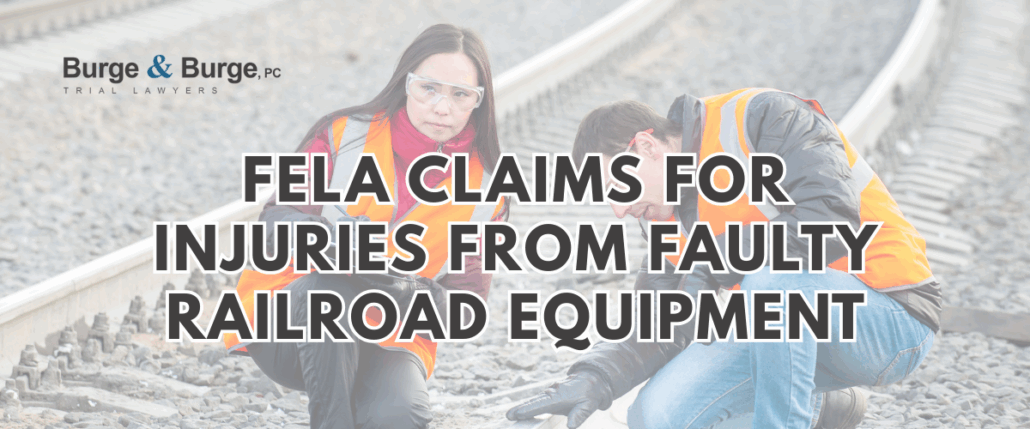
FELA Claims for Injuries from Faulty Railroad Equipment
The rhythmic clang of steel on steel is the heartbeat of American industry, a sound synonymous with the hard work and dedication of railroaders. Yet, for the thousands of men and women who build, maintain, and operate this vital network, the workplace is fraught with inherent risks. While many picture catastrophic derailments when they think of railroad dangers, a far more common and insidious threat lies in the very tools and machinery workers use every day: faulty and defective equipment.
A Railroad’s Absolute Responsibility: The Duty to Provide Safe Equipment
Under FELA, a railroad has a fundamental and non-delegable duty to provide its employees with a reasonably safe place to work. This responsibility extends to every aspect of the work environment, from the tracks and railyards to the locomotives and the smallest hand tools. This isn’t just a suggestion; it is the law. The railroad must ensure that all equipment is not only functional but also safe for its intended use.
This duty is further reinforced by federal safety regulations, such as the Locomotive Inspection Act (LIA) and the Safety Appliance Act (SAA). These laws impose strict liability on railroads for certain equipment failures.
- The Locomotive Inspection Act (LIA): This act mandates that all parts and appurtenances of a locomotive must be in proper condition and safe to operate without unnecessary peril to life or limb. If an injury results from a violation of the LIA, the railroad is held liable, and the injured worker does not need to prove negligence. The failure of the equipment itself establishes the violation.
- The Safety Appliance Act (SAA): Similarly, the SAA requires that railroad cars be equipped with specific, functioning safety appliances like couplers, handbrakes, and ladders. If an SAA-mandated appliance is defective and contributes to an injury, the railroad is automatically considered liable. The worker does not have to show the railroad was careless; the failure of the appliance to work as intended is enough.
The principle of “absolute liability” under these statutes is a powerful tool for injured workers. It means that even if the railroad was unaware of the defect or if the worker was partially at fault, the railroad can still be held 100% responsible for the injuries caused by the faulty equipment.
Common Culprits: Types of Faulty Equipment Leading to FELA Injuries
Equipment failures on the railroad can happen in countless ways, affecting nearly every job class. The machinery is complex, the work is demanding, and the potential for mechanical breakdown is constant. From our experience, certain types of defects appear more frequently in FELA claims.
Locomotive and Rail Car Defects
- Defective Brakes: Malfunctioning air brakes or handbrakes can lead to runaways, collisions, or derailments.
- Faulty Couplers: When coupling mechanisms fail to engage or disengage properly, workers can suffer crush injuries, amputations, or be struck by moving cars.
- Worn or Cracked Wheels: Wheels that are compromised by cracks or excessive wear can shatter or break, causing catastrophic derailments.
- Malfunctioning Doors: Defective doors on railcars can trap workers or fail to secure loads, leading to crushing or impact injuries.
- Leaking Fuel or Fluid Lines: Leaks can create serious slip-and-fall hazards on walkways and in locomotive cabs, or pose a significant fire risk.
- Inadequate Seating: Worn-out, broken, or poorly designed locomotive seats can contribute to cumulative trauma injuries, affecting a worker’s back, neck, and spine over time.
- Broken Safety Appliances: Missing or defective handholds, ladders, sill steps, and grab irons are direct violations of the SAA and a frequent cause of dangerous falls.
Track and Maintenance-of-Way Equipment Failures
- Defective Switches: A switch that is difficult to throw or that malfunctions can cause severe back, shoulder, and joint injuries.
- Faulty Track Tools: Malfunctioning spike pullers, tampers, or rail saws can lead to sudden, violent accidents.
- Track Defects: While not “equipment” in the traditional sense, poorly maintained tracks, including broken rails, warped track, or inadequate ballast, represent a failure of the railroad’s provided “tools” for safe passage and are a primary cause of derailments.
Shop and Yard Equipment Failures
- Malfunctioning Machinery: Defective cranes, forklifts, or other heavy machinery can lead to devastating accidents.
- Inadequate Tools: Providing the wrong tool for the job, or a tool that is not properly maintained, constitutes negligence.
Any piece of equipment, no matter how large or small, that is not in proper working order can be the basis for a FELA claim if it causes or contributes to an injury.
Proving the Case: How Railroad Negligence is Established
In FELA claims not covered by the strict liability provisions of the SAA or LIA, the injured worker must prove that the railroad was negligent. Negligence, in this context, means the railroad failed to act with reasonable care, and this failure played a part—no matter how small—in causing the injury. This is often referred to as the “featherweight” burden of proof, which is a lower standard than in typical personal injury cases.
To establish negligence in a faulty equipment case, an investigation will typically focus on:
- Failure to Inspect: Did the railroad adhere to its own rules and federal regulations for regular equipment inspections? Were inspections documented, and were issues addressed?
- Failure to Maintain and Repair: Were known defects ignored or improperly repaired? Maintenance logs, repair orders, and work reports can be critical evidence.
- Failure to Warn: Did the railroad know about a hazardous condition with a piece of equipment and fail to warn the employees who had to use it?
- Providing Inadequate Equipment: Was the tool or machine appropriate for the task at hand? Was it outdated or not designed to be used in the way the railroad required?
- Insufficient Training: Were employees properly trained on the safe operation of the equipment? Lack of adequate training is a form of negligence.
An experienced FELA attorney will launch an independent investigation to uncover evidence of negligence. This involves securing maintenance records, interviewing witnesses, consulting with engineering and mechanical professionals, and documenting the history of the specific piece of equipment that failed.
The Aftermath of Injury: Documenting Your Case is Essential
If you have been injured by what you believe was faulty railroad equipment, the steps you take immediately following the incident can have a significant impact on your ability to bring a successful FELA claim. Your health and safety are the first priority, but protecting your legal rights is also critically important.
Immediate Actions to Take
- Seek Medical Attention: Get immediate medical care for your injuries. This not only begins your road to recovery but also creates an official medical record of the harm you suffered. Be sure to tell the doctor exactly how the injury occurred and mention the specific equipment involved.
- Report the Injury: Report the accident and your injury to your supervisor as soon as possible, following your company’s procedures. When you fill out an accident report, stick to the facts. Be precise and truthful, but do not guess or speculate about the causes. Importantly, do not let anyone pressure you into changing your story or downplaying the role of the equipment. Keep a copy of the report for your own records.
- Preserve the Evidence: If it is safe to do so, take photographs or videos of the defective equipment, focusing on the part that failed. Also, photograph your visible injuries. The condition of the equipment can change quickly as the railroad may repair or even discard it, so visual evidence can be invaluable.
- Identify Witnesses: Get the names and contact information for any coworkers or others who saw the accident or have knowledge about the faulty equipment. They may have experienced similar problems with it in the past.
- Keep Detailed Notes: As soon as you are able, write down everything you remember about the incident. Include the date, time, location, equipment number, and what you were doing. Maintain a journal to document your pain levels, medical treatments, and how the injury is affecting your daily life.
The Long Road: Types of Compensation Available Under FELA
A serious injury can have far-reaching consequences, affecting your health, your family, and your financial stability. The goal of a FELA claim is to make the injured worker whole by providing compensation for all damages resulting from the railroad’s negligence.
Unlike state workers’ compensation systems, which typically have capped benefits, FELA allows for the recovery of a broader range of damages, including:
- Past and Future Lost Wages: Compensation for the income you lost while unable to work, as well as the loss of future earning capacity if your injury prevents you from returning to your railroad job.
- Past and Future Medical Expenses: Payment for all medical care related to the injury, including hospital stays, surgeries, physical therapy, medication, and any anticipated future medical needs.
- Pain and Suffering: Damages for the physical pain, emotional distress, and mental anguish caused by the injury and its aftermath.
- Disability and Disfigurement: Compensation for permanent impairments, scarring, or the loss of a limb.
- Loss of Quality of Life: Damages for the injury’s impact on your ability to enjoy your hobbies and daily activities.
An attorney experienced in FELA matters can work with medical and economic professionals to accurately calculate the full extent of your damages, ensuring that any settlement or verdict accounts for the lifetime impact of your injury.
Navigating the Claim: Why Legal Guidance is So Important
Dealing with a railroad after an injury can be an intimidating process. Railroad companies and their claim agents are focused on protecting the company’s financial interests, which often means minimizing the value of your claim or denying it altogether. They may pressure you to give a recorded statement or sign documents before you have had a chance to seek legal advice. It is vital to remember that the claim agent works for the railroad, not for you.
Engaging a law firm with a deep understanding of FELA is not just advisable; it is a necessity for leveling the playing field. An experienced FELA lawyer will handle all communications with the railroad, conduct a thorough and independent investigation, gather the evidence needed to prove negligence, and fight to protect your rights throughout the process.
Contact Burge & Burge, PC for Knowledgeable FELA Representation
For decades, the team at Burge & Burge, PC has been dedicated to representing injured railroad workers and their families. We know the immense physical, emotional, and financial toll that an on-the-job injury can take. We are committed to holding negligent railroads accountable and securing the full and fair compensation our clients deserve. Our firm works diligently with medical and equipment professionals to construct compelling cases that fully account for the cause of the injury and its long-term impact on your life.
If you have been injured due to faulty or defective railroad equipment, you do not have to face the railroad alone. Contact our office today for a free and confidential consultation to discuss your case and learn how we can help you navigate the FELA claims process.
👉 FRSA Whistleblower Protection
👉 Documenting Your Railroad Worker Injury: Why Every Detail Matters
👉 How Will My Railroad Medical History Affect My FELA Claim?
👉 What are the Types of Past and Future Damages Covered under FELA?
👉 Comparative Negligence in FELA Cases: What It Means for Alabama Railroad Workers
👉 How Understaffing in the Railroad Industry Affects Worker Safety






Leave a Reply
Want to join the discussion?Feel free to contribute!